A Partnership That Signals Shunho’s Ascending Global Influence
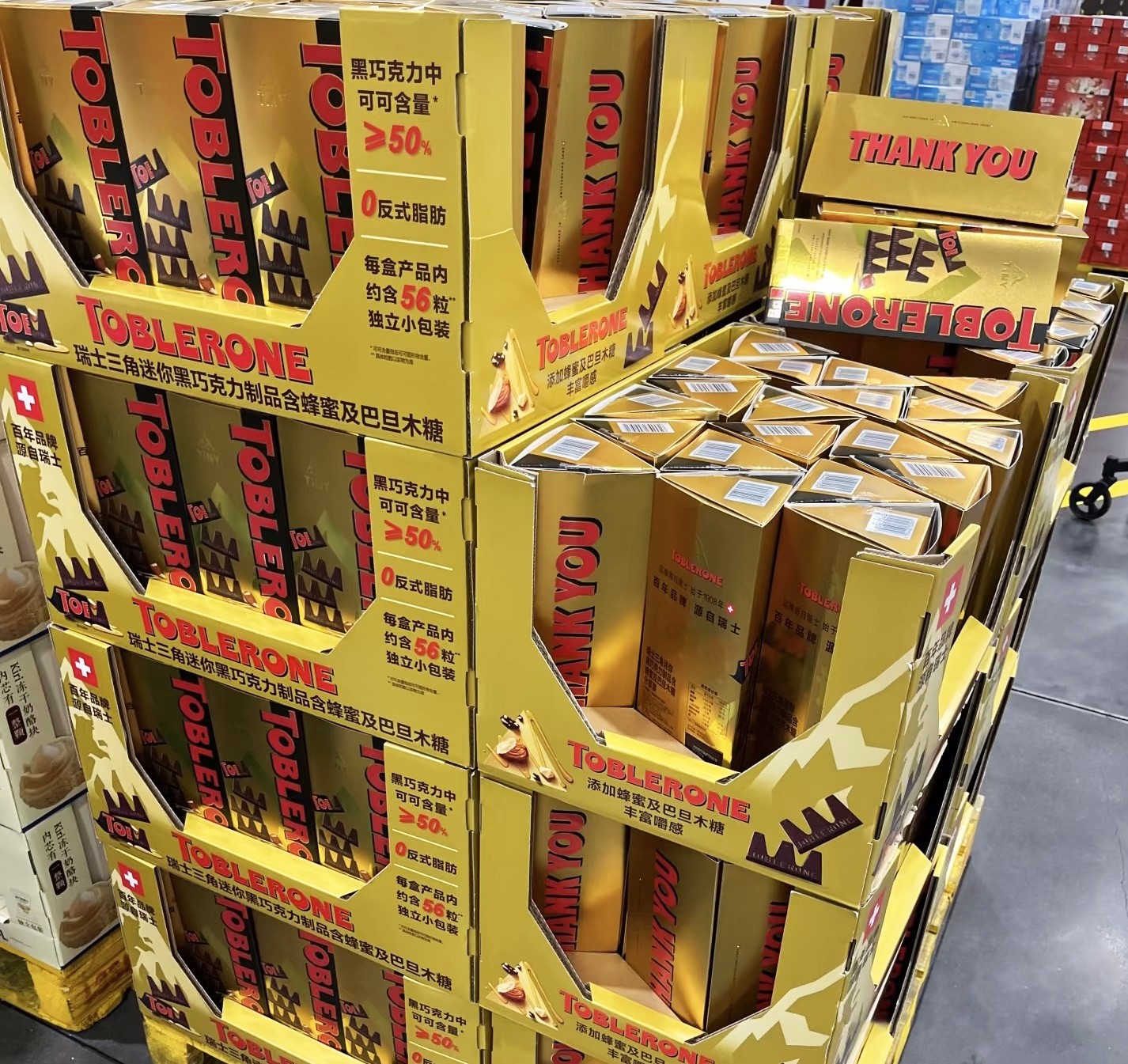
As Shunho Creative enters its next phase of global expansion, our collaboration with Mondelez International reflects the confidence that world-class brands place in our capabilities. When Toblerone year-end sharing packs reach Sam’s Club China, consumers see an iconic symbol of Swiss chocolate. Industry leaders, however, recognize something equally significant: Shunho’s TransMet® Silver paperboard delivering the premium aesthetics, consistency, and performance demanded by global confectionery brands.
Mondelez’s adoption of TransMet® is more than an operational alignment—it is a clear endorsement of Shunho’s leadership in materials innovation, scalable global manufacturing, and sustainable packaging technologies. Together, these strengths form the foundation of Shunho’s growth strategy and reinforce the company’s readiness to operate at public-market standards.

Operational Performance: Built for Scalable Global Manufacturing
Packaging that aspires to global adoption must excel in manufacturability, scalability, and reliability. In Mondelez’s production tests, TransMet® Silver delivered strong results across all three dimensions. It ran smoothly on high-speed production lines, reducing downtime and minimizing defect rates. It maintained precise color fidelity and registration, ensuring that Toblerone’s Matterhorn imagery appeared identical from the first unit to the ten-thousandth. It also demonstrated stable performance across China’s diverse climate zones, a requirement for nationwide distribution.
Collectively, these outcomes show that TransMet® can meet the operational pressures associated with Fortune 500 supply chains and position Shunho as a globally reliable manufacturing partner, not simply a materials provider. For investors, this level of operational consistency signals Shunho’s ability to support multinational volume, expand into new categories, and scale effectively as the company enters the public markets.
Performance with Responsibility
Sustainability has become a core expectation for global brands, and Shunho designs materials that meet these demands without compromising performance. TransMet® Silver reduces the use of finite resources by at least 65 percent compared to traditional laminated structures. It also carries the internationally recognized OK Compost Home certification, issued by TÜV Austria, which verifies that the material can fully biodegrade under ambient, real-world home-composting conditions. This certification underscores that TransMet® Silver meets rigorous global standards for environmental safety, not theoretical claims.
In addition, the plastic carrier films used in the transfer-metallization process are reused for a minimum of three cycles before being recycled into new plastic materials, further minimizing environmental impact across the production chain. Together, these capabilities demonstrate that premium packaging and environmental responsibility are not competing objectives. With TransMet®, brands no longer need to choose between high performance and sustainable design.
What This Means for the Industry
As premium sustainable packaging shifts from a differentiator to the default expectation, the real competitive question becomes one of perception and influence: who shapes how the world understands what “better materials” should feel like, look like, and signal? In a marketplace where consumers make decisions in milliseconds, scale alone is no longer enough. Suppliers must now guide the mental models that drive choice—defining the sensory cues that convey trust, the sustainability claims that feel credible, and the material experiences that capture attention in a crowded retail environment.
The companies that lead this transition will be the ones that do more than manufacture. They will be the ones that help the market think differently—setting new standards, reframing expectations, and creating the cognitive blueprint for what next-generation materials should be. This is no longer just about competing in today’s packaging industry. It is about shaping the architecture of tomorrow, where innovation is defined not only by technical performance, but by the clarity, confidence, and intuitive trust it creates in the minds of consumers and global brands.
 EN
EN
 AR
AR
 HR
HR
 CS
CS
 DA
DA
 NL
NL
 FI
FI
 FR
FR
 DE
DE
 EL
EL
 HI
HI
 IT
IT
 JA
JA
 KO
KO
 NO
NO
 PT
PT
 RU
RU
 ES
ES
 TL
TL
 ID
ID
 VI
VI
 HU
HU
 TH
TH
 TR
TR
 MS
MS
 GA
GA
 CY
CY
 MK
MK
 HY
HY
 PL
PL


 Hot News